
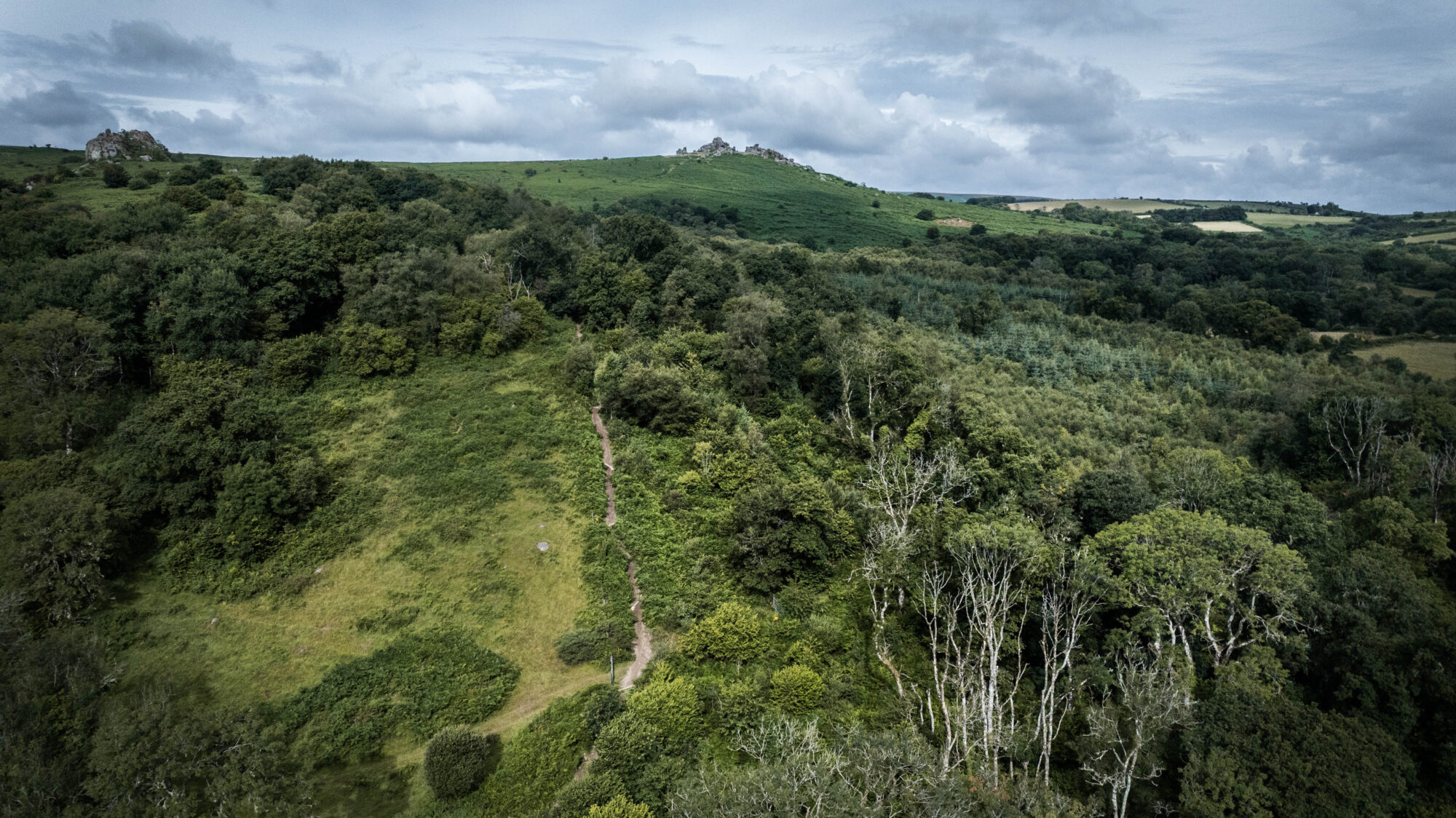
Have you ever stood in a place so still, so full of possibility, that it felt as though the earth beneath your feet was pausing waiting to see whether you’d be brave enough to help it recover?
That was me one cold morning this autumn, standing at the edge of one of our newly acquired estates. The light hadn’t yet broken; the air was that pale, weightless grey that arrives just before dawn. I could hear my own breath, the faint rustle of wind through old, tired grasses, and then, cutting through the quiet like an echo from another age, the bubbling call of a capercaillie.
It drifted across our boundary from neighbouring land that has been managed for conservation for years. A rare, ancestral sound. A sound that should never have disappeared from our landscapes. A sound that told me, with absolute clarity, what becomes possible when land is cared for with patience, courage, and belief.
And in that soft dawn, with that call holding the air, I knew what 2025 truly was for us:
the year we shifted from planning to delivering, from preparing to restoring, from dreaming to doing.
The capercaillie fell silent. But the land didn’t. And neither did we.
A Bigger Landscape, A Deeper Responsibility
In 2025, Oxygen Conservation grew into something larger not simply in scale, but in responsibility.
We now hold just over 50,000 acres in our care. Acres that once stood fragmented or exhausted now forming part of something far more powerful: over 500,000 acres of connected habitat, stretching across hillsides, valleys, woodlands and watercourses. Land where wildlife can at last move freely again, and ecological processes can begin to heal instead of halt.
This is what landscape-scale conservation means in reality: a capercaillie calling across a boundary, crossing from one restored landscape into another, reminding us that nature needs corridors, not corners, connection, not compromise.
And with scale comes added pressure. Not only ecological pressure, but political pressure too, the shifting winds of policy, debate, and public expectation. In a time when environmental ambition is too often reduced to a talking point, we continue to work with integrity, evidence and a long-term view.
Owning land in this way is not about possession. It is about stewardship of place, of possibility, and of the future.
Doing the Hard Things Because They Matter
2025 was a year of confronting difficult truths head-on. Restoring ecosystems means restoring balance, and that balance has been lost for too long.
We removed 1024 deer from our estates this year. It is never a decision taken lightly. It is a responsibility that weighs on every one of us. But without this, young trees will never rise, scrub will never return, riverbanks will remain bare, and the landscapes we wish to restore will stay locked in exhaustion.
From this necessary work came something meaningful: 37,268,120 calories of sustainable, local food, ensuring that nothing is wasted and every decision is grounded in respect.
Real conservation is not the avoidance of difficult choices. It is the courage to make them, because the land needs you to.
2025: The Year the Land Took Its First Healing Steps
Across all our estates, from the raw edges of Norfolk to the deep folds of Devon, 2025 marked a quiet turning point.
Floodplains that had been disconnected for decades began to breathe again. Soils compressed by generations of extraction and intensity started to loosen and rejuvenate. Scrub crept back into fields long held barren. Invasive species were removed, allowing space and light for native life to return. Regenerative agricultural practices began to take root. Ecotourism grew into something more meaningful, offering connection, not just accommodation. And data, mapping, and monitoring gave the land a clearer voice than ever before.
None of this happened in isolation. Each shift, each subtle sign of life returning, came from hundreds of interconnected efforts, aligned in purpose and delivered with conviction.
This was not a year of proposals or predictions. It was a year of evidence lived, felt, and seen across the land.
The Team Who Made It Happen
None of the progress made in 2025, not a single step of it, was the result of one individual or one group alone. It was driven by our incredibly passionate and knowledgeable team at Oxygen Conservation, a team for whom every challenge is seen not as a setback, but as an opportunity to do something better.
Our estate managers and rangers walked the land each day, reading its signals, responding to its needs, and taking on the practical, daily work of restoration. But behind them stood the wider Oxygen Conservation team planners, coordinators, ecologists, the operations team, analysts, and more, all working with a shared belief that this mission matters.
What we achieved this year was not the product of a workforce. It was the momentum of a collective unified by purpose, driven by courage, and grounded in a simple truth: the land deserves our best, even when the work is hard.
2026: The Year Momentum Becomes Movement
If 2025 was the year we took our first steps, 2026 will be the year we begin to gather pace.
The pressures ahead are real: ecological decline accelerates, political landscapes shift unpredictably, and cultural expectations grow heavier each year. But pressure is not something to fear. It is something to grow beneath.
As Churchill said: “It is not the load that breaks you, but the way you carry it.”
We are choosing to carry it with integrity, unity, and determination. We are choosing to lead where others hesitate. We are choosing to demonstrate what is possible when courage meets care, and when land is given the chance not just to survive, but to thrive.
So as we step into 2026, anticipation hums beneath every decision, every relationship, every new acre, every intervention.
Because if a capercaillie calling across our boundary was the sound of possibility in 2025, just imagine what we will hear and see next year, when our team, our land, and our mission move forward together with full momentum.
2025 was the moment the land inhaled. 2026 will be the moment it begins to sing. Watch this space.