
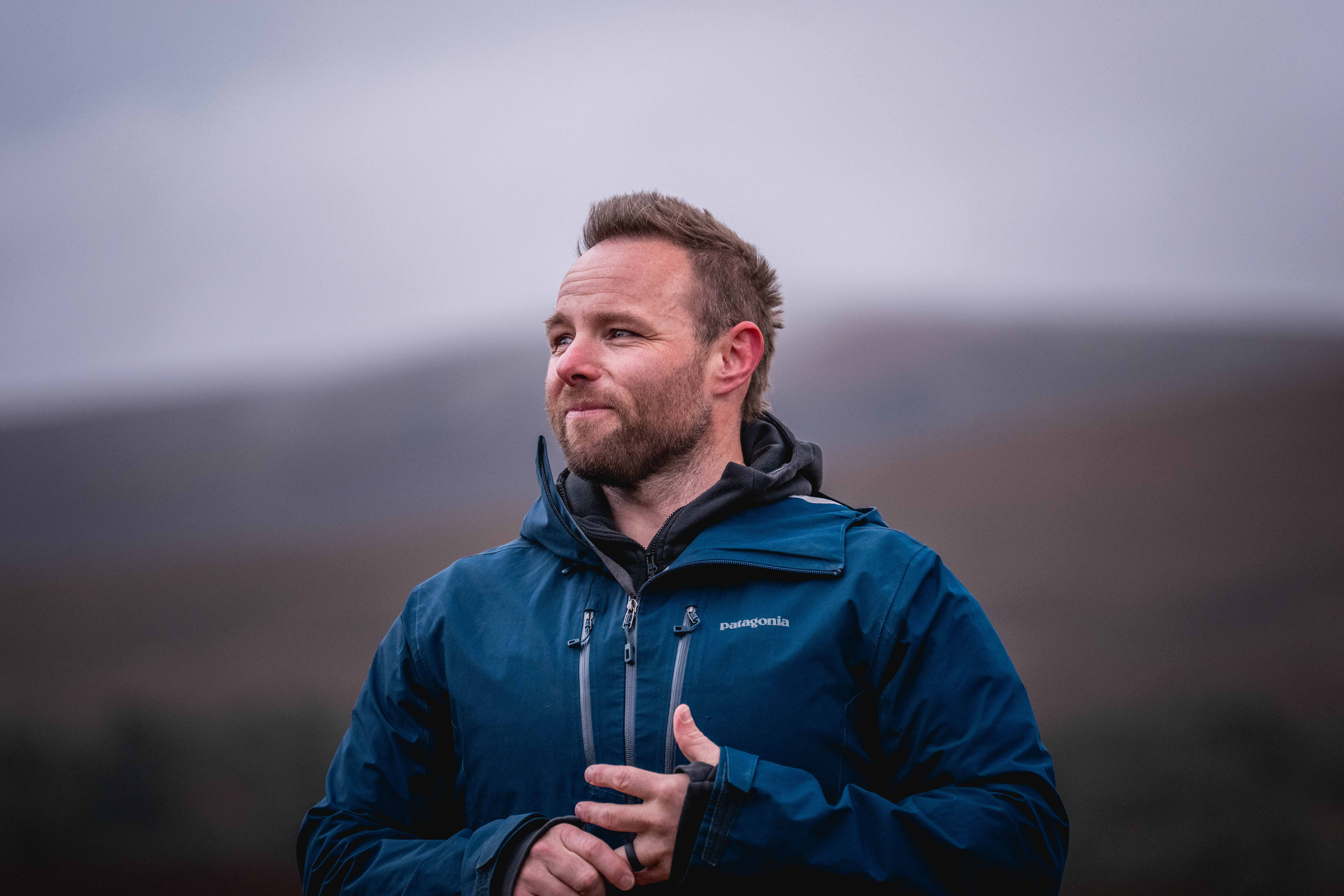
“What do you do for fun, Rich?”
It’s a question I get asked all the time — at introductory meetings, on podcasts, after talks. I always smile. Not because it’s a bad question, but because it’s the wrong one. And often I’ll look down and see the calluses on my hands, a physical reminder that everything compounds.
And then I answer, always the same way.
This is what I do for fun — though I realise that might sound strange to most. Building Oxygen Conservation. Scaling Conservation. Reimagining what’s possible with business, with nature, with people. That’s what gets me out of bed in the morning, and keeps me going long after most would call it a day. It’s not normal, but did anyone really expect me to be normal?
And I’ve been lucky — not in the entitled, it’s been handed to me way, but in the way that all decisions and actions are part skills, part effort and part luck, and I’ve had my fair share of the latter.
People confuse passion for ease. Let me be clear: this work is hard. Not hard in a whiny LinkedIn-humblebrag kind of way. I mean, actually hard. Back-to-back 70-hour weeks hard. Migraine hard. Push past every sane limit hard. But I don’t say that for applause, or even sympathy. I say it because it’s true. And because if we’re going to have an honest conversation about performance, leadership, and scaling anything meaningful — from a conservation business to a life worth living — then we’ve got to start with the truth.
Everyone gets tired. Everyone gets annoyed. Everyone feels like giving up. The difference? The people who succeed keep walking. Through the stress. Through the failure. Through the storm.
And here’s the catch: they don’t just keep walking. They adapt.
You Can’t Have an Easy Life and a Strong Character
Jimmy Carr (the comedian) said that “you can’t have an easy life and a strong character”. Strangely enough, the best comedians are increasingly modern philosophers in disguise – perhaps it’s because they’re still afforded a modicum of freedom to explore the margins of acceptable debate. It makes a lot of sense when you break down the skill set: a comedian’s job is high-speed pattern recognition, emotional intelligence under pressure, and risk management with a punchline – all in front of an audience.
The line stuck with me because it’s true. You don’t develop calluses from reading about hard things. You get them from doing hard things. And I mean that quite literally.
I’ve been picking up barbells for 25 years – don’t the years go by so incredibly fast? Every rep, every lift, every success and every mistake — it all leaves a mark. The skin tears. The pain sharpens. But over time, your hands adapt. They get stronger. Thicker. Tougher. That’s what experience is. Not time. Impact.
It’s the same in business. The same in conservation. You don’t grow through comfort. You grow through discomfort. You learn when it hurts. You adapt because you have to. And you heal not by waiting for the pain to go away, but by becoming the person who can carry it, who keeps turning up, who keeps working hard to inspire others, not to do the same but to do and be more.
That’s what I mean when I talk about resilience — not the cheesy Instagram (live, laugh, love) version. The real kind. The kind that’s forged by pressure, repeated exposure, and the refusal to stop.
Eastern Bloc Training Plans and Business as Sport
I love strength sports because they’re honest. You either pick it up or you don’t. And in the Eastern European model of training, they didn’t just test for strength. They trained for capacity — not the ability to work a 16-hour day, but to do it again the next day, and the next, and the next.
That’s how I approach work. It’s not about heroic moments. It’s about consistency. Sustainability. Relentless repetition. Consistency compounds.
We’ve professionalised conservation because it had to be. Just like a football club aiming for multiple titles across multiple seasons, we’re not interested in one-off wins. As Alex Ferguson outlined in his book Leading, “greatness is sustained, not sporadic”. We’ve adopted that mindset wholesale. Conservation isn’t charity work anymore — it’s a high-performance sport played on the most complex pitch imaginable. The scoreboard has IRRs now. The natural capital economy is moving at the speed of private equity with the complexity of ecosystem restoration. The game got faster, so we had to train harder.
And just like elite sports teams, we’ve become obsessed with recruitment. Not just finding good people, but finding the right people — the ones who already operate at a high level, and more importantly, have the resilience to sustain that level over time. We’re not interested in those who peak early and burn out. We hire for trajectory. We seek out individuals with enough potential energy to keep accelerating, outpacing even the rapid growth of our business.
They need the strength to handle the load, the mindset to stay curious, and the humility to adapt. Our bar is high. Intentionally so. Because we don’t just want to win today — we want to build a team that’s still performing, still growing, and still redefining what’s possible five, ten, twenty years from now.
The Gift of a Difficult Childhood
This part’s personal. I didn’t have an easy start. I won’t go into detail here, repetition is boring, but I didn’t enjoy my childhood. And for those of you who know what that feels like — you either already understand, or one day might — that it can be one of the greatest, hardest-earned gifts of all.
Not in the moment. In the moment, it’s painful. Horrible. Unfair. But over time? It’s a superpower. It gives you a chip on your shoulder, a fire in your belly, and a refusal to let anyone else write your story. That’s invaluable.
Would I trade it for love, security, and a great education? I don’t know. Probably. That’s what I want for my kids, so you’ll have to ask them what they think in the next few years. But I wouldn’t be me without it.
Experience compounds. So does pain. But only if you let it. Only if you pay attention and choose to learn the lesson instead of playing the victim.
So What Does This Have to Do with Business or Conservation?
Everything.
You can’t Scale Conservation by playing it safe. You can’t restore ecosystems with fragile egos and part-time commitment. We’re building a new asset class — the natural capital economy — in real time. That requires character. Speed. Precision. And a hell of a lot of grit (that might be our wonderful Head of People’s favourite characteristic in people).
Character Is a Compounding Asset
Leadership isn’t something you’re awarded — it’s something you embody. Not with words, but with repeated acts of grit, clarity, and conviction, especially when it’s inconvenient, uncomfortable, and when the easy option is to hand the challenge to someone else.
So no, I don’t switch off. I don’t have a hobby that isn’t somehow connected to who I am or what I’m building. I’ve designed (and redesigned) my life that way. And that might not be for everyone, but it’s certainly for me. I’ve been lucky enough to have the opportunity to do something incredible and I’m willing to sacrifice almost everything to do it.
Because what we’re doing at Oxygen Conservation isn’t just about nature. It’s about proving that performance and purpose can live in the same room. That capitalism and conservation can share a balance sheet. That character — real, earned, callused character — is the foundation of every meaningful success.
And when the fire comes, the rain lashes down, or the sharp halo of a migraine flickers in my periphery, I’ll still be there. Not because I must, but because I can. Because somewhere in the tension between pain and purpose, pressure and perseverance — that’s where a callused character is made and success (whatever that means to you) is found.