
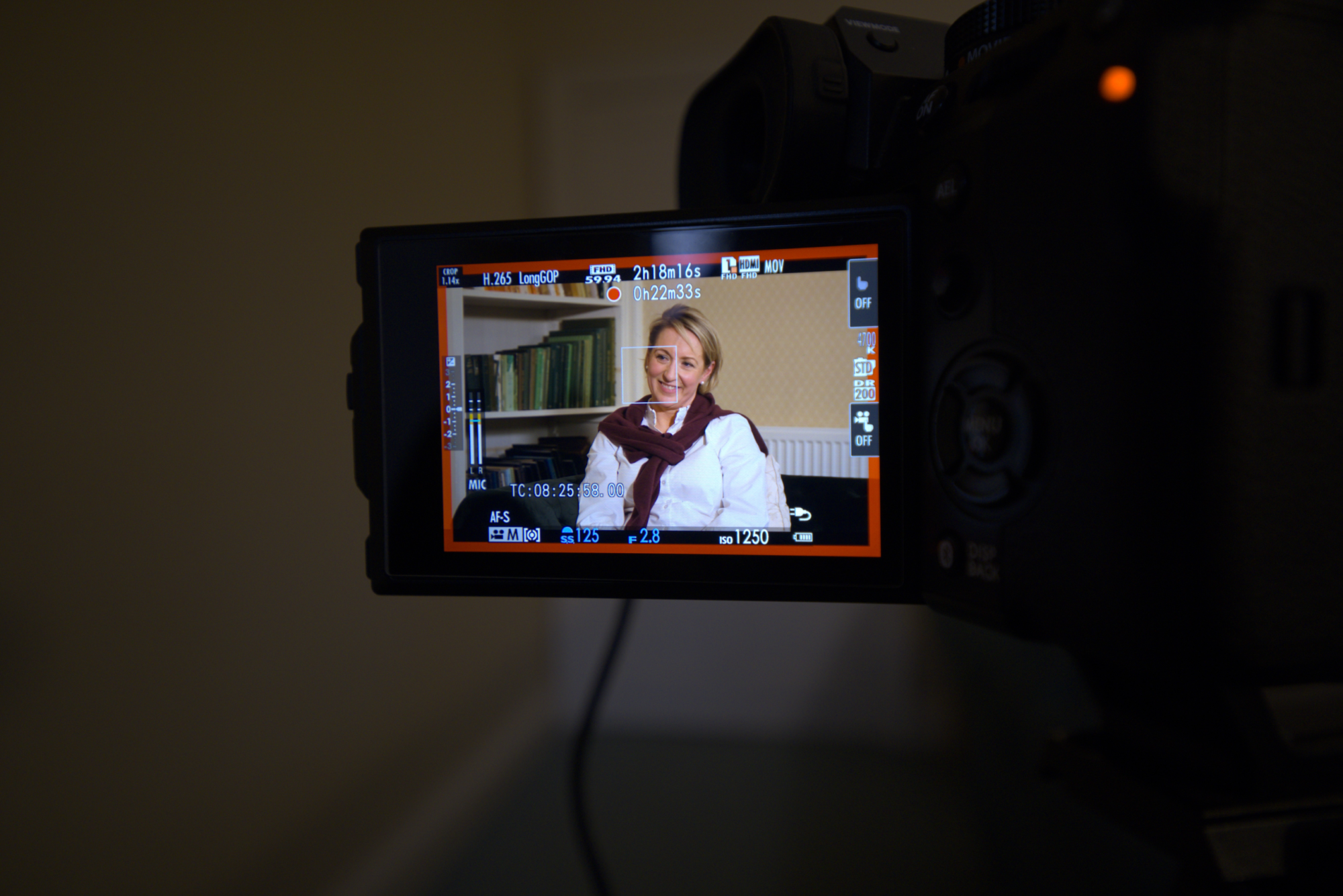
Claire Whitfield didn’t mean to say anything profound.
She was just trying to answer the first question of the podcast—one she’s probably fielded a hundred times before. But as the words wonderfully tumbled out, they didn’t arrive polished and prepared. They arrived honest and open.
“I’m not quite sure which hat I’m wearing today,” she said with a nervous laugh that wasn’t really nervous, just the kind that escapes when you’ve finally said something that’s quietly been true for a while.
And there it was.
In that one sentence: the chaos, the complexity, the compromise of a life built around doing something meaningful. Because Claire isn’t just a Partner at Knight Frank. She’s also a mum. And a wife. And charismatic dealmaker, perpetual motion machine, cultural heartbeat of her team—and a walking manifesto for getting things done in the rural economy.
There was no preamble, no posturing. Just a person caught between the expectations of her calendar and the reality of her life. And isn’t that the truth for all of us?
Which Hat Fits Best?
And that is how I arrive at writing about one of my favourite questions, and one I asked myself every day. If you had to pick one—business, partner, or parent—which are you best at right now?
Be warned, the answer might not sit that comfortable, at least not the first time.
Because most of us don’t want to answer. We want to believe we’re giving enough to everything and everyone – some people will initially say all in balance, then pause to realise that isn’t real or reality. That we’re present at the team offsite and present at bedtime. That we can bring strategy to Monday’s board meeting and tenderness to Tuesday’s tantrum. That we can show up to every milestone with clarity, commitment, and capacity – and absolutely presence.
But we can’t.
Not because we’re weak, or disorganised, or lacking in ambition. Quite the opposite.
It’s because true performance—real, gritty, high-level execution—requires more than just showing up. It requires energy, focus, commitment and most crucially, sacrifice. And the harsh truth is, focus on one thing always means less focus on something else.
The High Cost of High Performance
The world of elite sport has always understood this. If you want to win, you sacrifice. You skip birthdays, leave parties early, decline wedding invitations, and end relationships. You make hard choices in pursuit of marginal gains – but that’s ok because gold medals are worth it.
And crucially, the people around you expect it.
There’s an understanding—unspoken but accepted—that greatness has a cost, and that cost is borne not just by the athlete, but by those who love them.
In sport, we praise that selfishness. We call it commitment.
But in business? We pretend it doesn’t exist.
We ask people to lead teams, grow businesses, build markets, maybe even Scale Conservation, and still remember to send thank-you cards, make the school run, and be emotionally available to their partners at 9 p.m. on a Tuesday.
Many celebrate the hustle while quietly judging the trade-offs, or pretending they’re not happening. We pretend the best leaders are effortlessly balanced, always available, perpetually present.
It’s a myth. And worse—it’s a damaging one.
The Sacrifices We Don’t See
I’m incredibly fortunate to be doing what I do. Leading Oxygen Conservation and trying to Scale Conservation at pace is the most meaningful, rewarding, and relentlessly demanding thing I’ve ever done – and right now it matters more than virtually everything else.
But let me be absolutely clear: the sacrifices are not mine alone.
My wife, Helen, has put her career, her ambitions, and—at times—her happiness on pause so I can chase this dream. She carries the parenting load with patience and kindness, fielding the questions, running to the many after school clubs, fixing the meals, calming the storms. She has done this not once or twice but continuously, often without thanks, always without conditions year after year.
My kids, who are still so little, already understand that their dad is “away again.” They say goodnight and then ask, “Will you be here in the morning?” Sometimes I am. Often, I’m not.
These are not complaints. They’re recognitions.
Because behind every person chasing something big is someone else holding the line—often silently, invisibly. There is no great performance without great sacrifice. And often, the person making that sacrifice isn’t the one getting the applause.
Claire’s Quiet Courage
Claire’s story embodies this tension beautifully.
She’s not sprinting through meetings pretending everything’s perfect. She’s juggling—imperfectly, but intentionally. She’s showing up at work with precision and vision, while showing up at home for the morning horse ride and the bedtime stories.
She’s succeeding without pretending it’s easy. That, in many ways, is the highest form of performance.
It’s not just about whether you’re crushing Q1 or nailing school drop-off. It’s about how honest you can be about the trade-offs. How willing you are to acknowledge the others making your success possible? How grateful you are to the people who hold space for your ambition.
You’re Always Wearing Multiple Hats
You don’t clock out of parenthood. You don’t shelf your ambitions at bedtime. And you don’t mute the ping of responsibility when your kid is trying to show you the latest work of art they’ve carefully crafted for you with the elegance of a Jackson Pollock.
But maybe that’s not the point.
Maybe the point is to notice who’s holding space when we can’t. The partner picking up the slack. The colleague covering the meeting. The child offering a slice of their world, even when ours feels like it’s on fire. Maybe greatness isn’t in being brilliant at all the roles, all the time—but in acknowledging that you can’t be and choose which hat you’ll wear for that particular performance.
Claire didn’t claim to have the answer. But in that moment of honesty—where she wasn’t sure which version of herself had shown up—she gave the rest of us permission to stop pretending we always do.
And who really wants to wear only one hat anyways.